


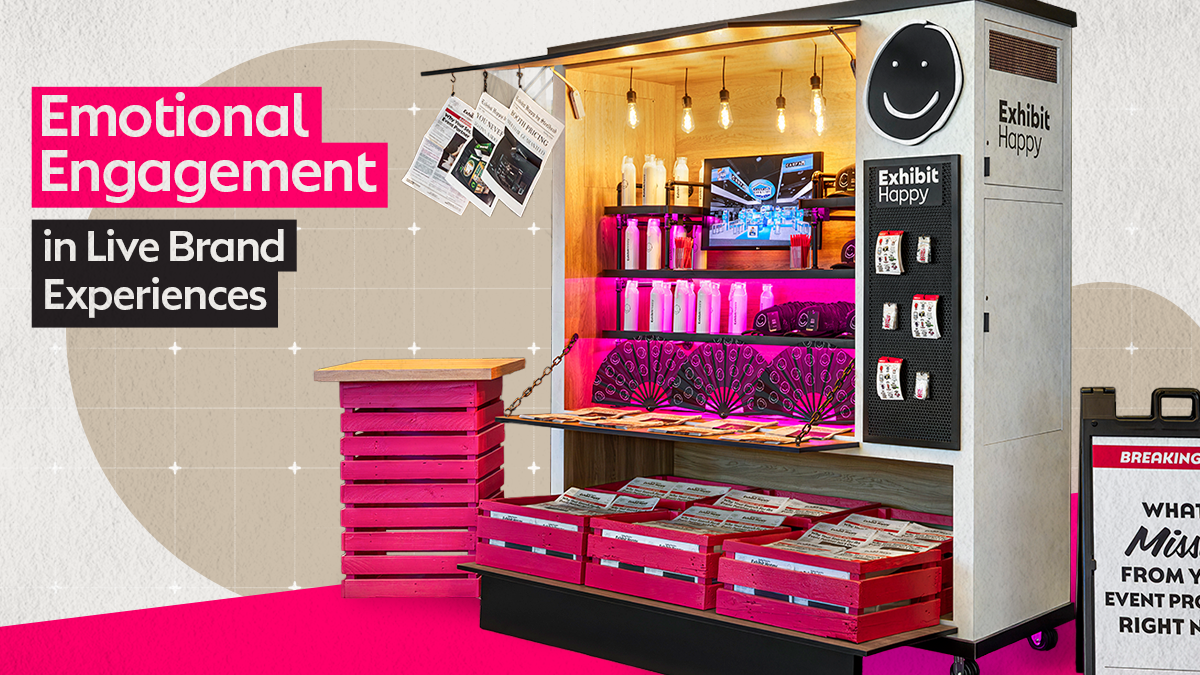
There's a moment that happens on the show floor that most experienced exhibitors have seen before.
Someone steps into a booth without much expectation. Maybe they were drawn in by the design. Maybe the space just felt different from everything around it. Maybe they were simply curious.
Then something shifts.
A conversation feels genuine instead of rehearsed. A product demo becomes more interactive than they expected. The whole experience feels like it was built for them rather than broadcast at them.
And just like that, that attendee is no longer passing through. They’re engaged, and the experience is more likely to stay with them.
That's the power of emotional connection in a live brand experience. And it has a bigger impact on trade show performance than a lot of teams give it credit for.
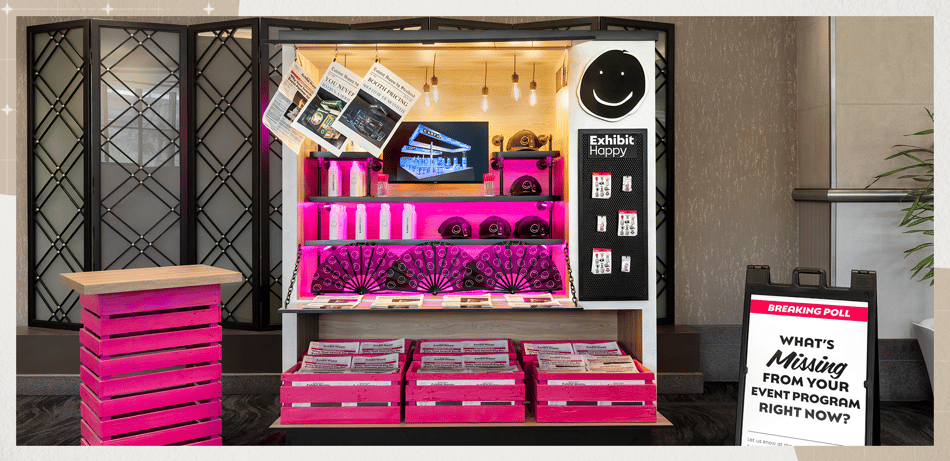
The Exhibit Happy by Steelhead newsstand at the Experiential Marketing Summit 2026, a space designed to invite curiosity, spark conversation, and give attendees something to interact with rather than just look at.
Why Emotional Engagement Matters More Than Most Metrics
Trade shows give brands something most marketing channels simply can't: uninterrupted, real-time access to their audience.
Not through a screen. Not through a retargeted ad following someone around the internet. Through an actual human experience, one that engages the senses, invites conversation, and creates a memory.
People tend to remember how an experience made them feel long after they forget specific talking points or product specs. The booth that made someone feel genuinely welcomed, impressed, or understood is going to stick with them in a way that a brochure never will.
In a crowded show environment where every exhibitor is competing for attention, emotional connection is one of the few things that's genuinely hard to replicate. It can't be templated. It has to be built.
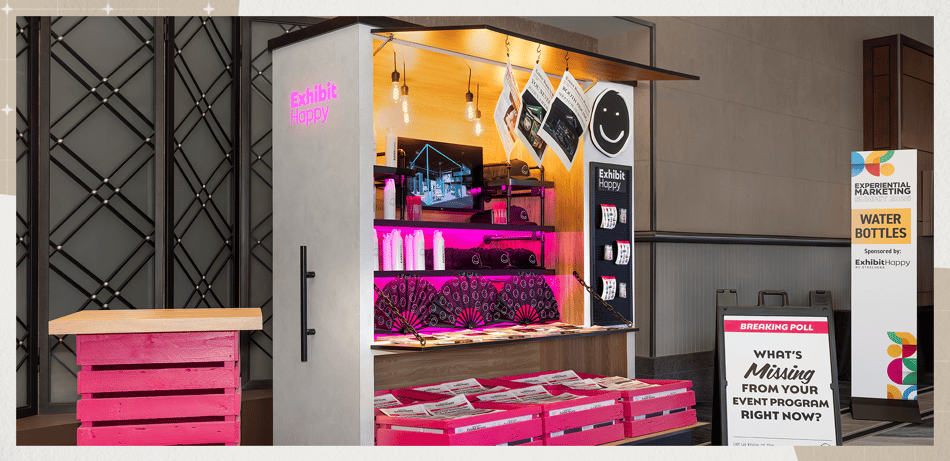
A space designed to stop people in their tracks, the Exhibit Happy by Steelhead newsstand at the Experiential Marketing Summit 2026.
What Emotional Engagement Actually Looks Like
Here's what it isn't: an over-the-top activation, a celebrity appearance, or a budget designed purely to stand out.
In most cases, emotional engagement comes from a series of intentional decisions working together consistently.
It starts with the environment. The layout, lighting, materials, and overall flow of the space all shape how someone feels before a single word is spoken. A booth that feels open and inviting creates a completely different emotional starting point than one that feels cluttered or closed off.
It deepens through interaction. People remember experiences they actively participated in far more than ones they passively observed. A hands-on demo, a genuinely curious question from a staff member, a moment that felt unexpectedly personal, these are the things that turn a booth visit into a brand memory.
And it lives or dies with your team. Booth staff have more influence over the emotional experience than almost any design element. A warm, knowledgeable, genuinely engaged team can create interactions that outlast the exhibit itself. A distracted or over-scripted one can undermine everything else.
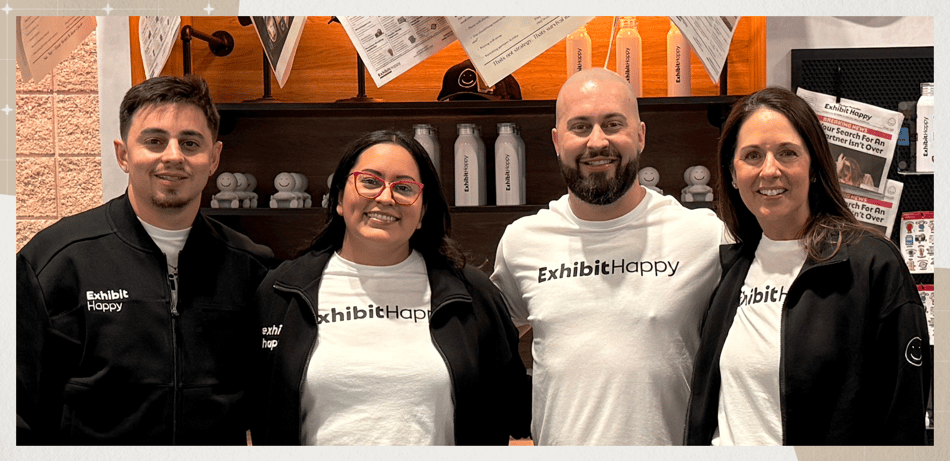
The Exhibit Happy by Steelhead team at ExhibitorLive 2026, because no exhibit design outperforms a genuinely engaged team.
The strongest live experiences feel aligned from the moment someone approaches to the moment they walk away. It They Environment, messaging, and interaction should all be telling the same story.
Emotion and Business Performance Aren't Competing Goals
It's worth saying clearly: designing for emotional engagement isn't soft. It's strategic.
When attendees feel a genuine connection to a brand, conversations get more productive. Trust builds faster. People spend more time in the space, ask better questions, and leave with a clearer sense of who you are and why it matters to them.
That doesn't mean every exhibit needs to be deeply immersive or dramatically experiential. It means the experience should feel intentional, like someone thought carefully about how it would feel to be on the receiving end of it.
The booths people remember aren't always the biggest or the loudest. They're usually the ones that made the experience feel effortless and clear from the attendee's perspective. That clarity is an emotional experience in itself.
Designing With Emotion in Mind
For teams thinking about emotional engagement as part of their trade show strategy, a few questions are worth asking before the design process gets too far along:
-
What do you want attendees to feel when they first approach the space?
-
What do you want them to walk away believing about your brand that they didn't before?
-
Does the environment, messaging, and interaction all support the same story, or are they pulling in different directions?
-
Does the experience reflect what your brand actually values, or just what it sells?
These aren't complicated questions. But they're the ones that separate exhibits that feel intentional from ones that feel assembled.
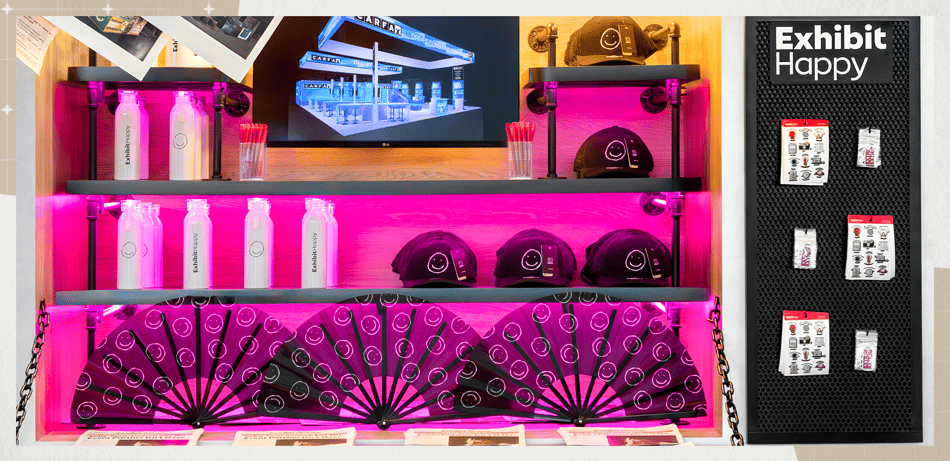
Every detail of the Exhibit Happy by Steelhead newsstand was considered, from the warm Edison lighting to the branded merchandise, because it's the details that make an experience feel intentional rather than accidental.
Where Exhibit Happy by Steelhead Comes In
Emotional engagement isn’t something you add on top of a trade show experience. It’s something that takes shape through the decisions made in strategy, design, and execution long before the show opens.
At Exhibit Happy by Steelhead, we work with brands to create exhibit experiences that feel intentional from start to finish, connecting the space, messaging, flow, and interaction in a way that supports meaningful engagement on the show floor.
Because the experiences people remember most usually aren’t the loudest ones. They’re the ones that felt clear, thoughtful, and genuinely connected to the brand behind them.