


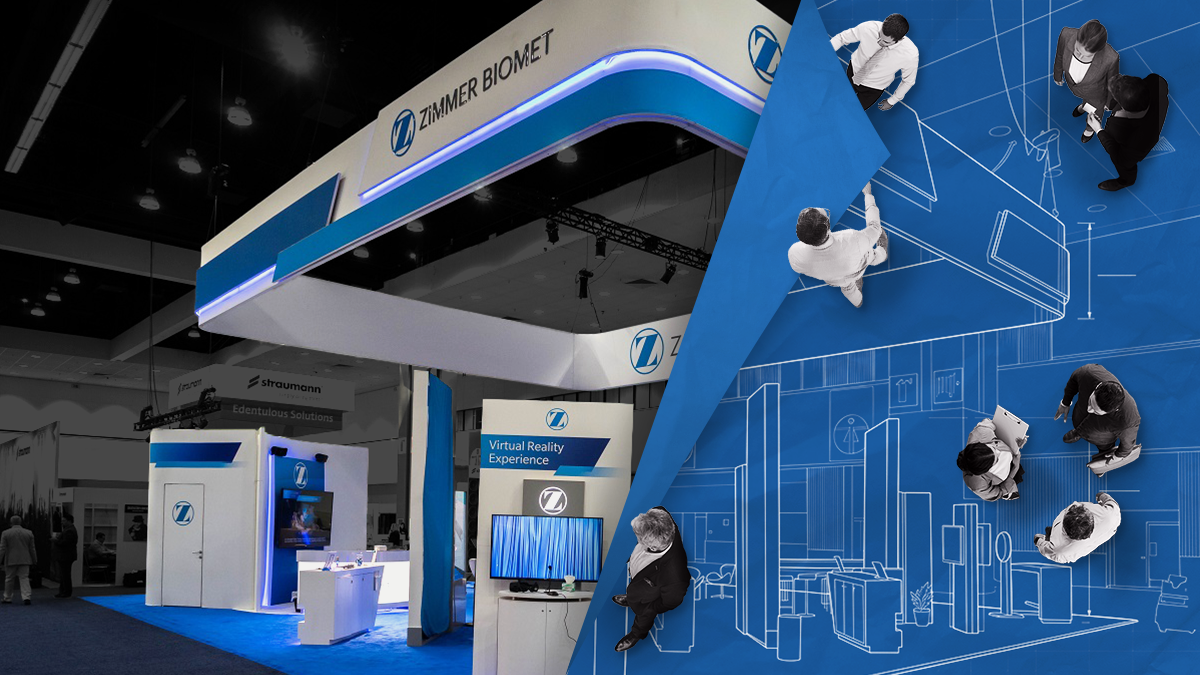
Medtech companies should design RSNA booths around buyer behavior, product demos, and strategic meetings instead of square footage alone. The best RSNA exhibit layouts create clear zones for quick qualification, hands-on demonstrations, private conversations, executive meetings, and launch storytelling.
RSNA Booth Design Should Start with the Sales Motion
A successful RSNA booth is not just a structure. It is a sales environment. That means design should begin with the conversations the company needs to create.
At RSNA, those conversations may involve:
- Radiologists
- Imaging directors
- Hospital executives
- Enterprise technology buyers
- Clinical champions
- Researchers
- Channel partners
- Investors
- Existing customers
Each audience has different needs. Some want a fast overview. Some need a technical demo. Some need a private executive conversation. Some need proof, outcomes, or workflow context.
If the booth is not designed around those behaviors, the space may look impressive but underperform commercially.
Map the Booth Around Conversation Types
Instead of starting with square footage, start with the buyer journey.
A strong RSNA booth may include:
Attraction Zone — This is the first impression. It should quickly make the company's value clear. Buyers should understand what the company does, why it matters, and whether they should step in.
Qualification Zone — This is where staff can quickly determine whether a visitor is a high-value prospect, customer, partner, or casual attendee.
Product Demo Zone — This is where the solution becomes tangible. For medtech and radiology brands, demos often require screens, guided workflows, semi-private space, and enough room for discussion.
Clinical Proof or Content Zone — This area supports credibility. It can showcase outcomes, case studies, workflow improvements, customer stories, or launch messaging.
Private Meeting Zone — This is critical for enterprise buyers, hospital leaders, strategic accounts, partners, and executive conversations.
Executive Briefing Area — For high-value prospects, the booth may need a more controlled environment for deeper discussions.
Why MedTech Demos Need Flexible Architecture
A company may need to show a new imaging workflow one year and a broader enterprise platform the next. A diagnostic tool may become part of a larger AI-enabled ecosystem. A hardware story may become a software story. A single product may become a suite.
If the exhibit architecture is fixed, supporting those changes can be difficult.
Flexible architecture allows the booth to adapt as demo needs evolve.
That is one reason custom rental and access-model exhibits work well for RSNA. The physical environment can be shaped around the current sales motion rather than forcing it into an old booth.
Common RSNA Booth Design Mistakes
Many RSNA booths underperform because they are designed around presence instead of performance.
Common mistakes include:
- Too much space devoted to passive branding
- Too little space for private meetings
- Demo stations placed in noisy or crowded areas
- Graphics that do not match the current product story
- Overly complex layouts that slow traffic
- Not enough room for staff to qualify visitors
- Reusing old booth assets that no longer support the strategy
- Designing the space before defining the sales goals
The booth should not simply say, "We are here." It should help the sales team move the right people into the right conversations.
How Custom Rentals Support Better Booth Design
Custom rental exhibits allow medtech companies to design around the current show objective.
If this year is a launch year, the booth can emphasize storytelling and demo visibility. If this year is focused on enterprise sales, it can prioritize meeting rooms and executive briefing areas. If the company needs to reposition a product suite, the layout can support a more guided narrative.
The access model gives companies more room to adapt the environment without the long-term constraints of ownership.
RSNA Booth Planning Checklist
Before designing your RSNA booth, ask:
- Which product or capability needs the most attention this year?
- What should a buyer understand in the first 10 seconds?
- Which demos require screens, privacy, or guided walkthroughs?
- Which accounts need scheduled meeting space?
- How many conversations can the booth realistically support at once?
Where Exhibit Happy by Steelhead Comes In
Exhibit Happy by Steelhead helps medtech and radiology companies design RSNA environments around the conversations that create a pipeline.
Our custom rental and access-model exhibits are built to support product demos, executive meetings, launch storytelling, and fast-changing buyer needs. We help companies avoid the trap of designing around old booth assets and instead create environments that serve the current sales strategy.
Your RSNA booth should not just occupy space; it should move buyers closer to action.
Exhibit Happy by Steelhead can help you build that kind of exhibit.
FAQ
What makes a good RSNA booth design?
A good RSNA booth design supports clear messaging, efficient traffic flow, strong demos, private meetings, and strategic buyer conversations.
How much meeting space should a medtech booth have?
It depends on the sales strategy, but medtech companies targeting enterprise buyers should prioritize private or semi-private meeting areas for high-value conversations.
Why are product demos important at RSNA?
RSNA buyers often need to understand how a technology works in real clinical or workflow contexts. Demos help make the solution tangible.
Can custom rental booths support complex product demos?
Yes. Custom rental booths can be designed with demo counters, screens, private areas, theater spaces, and flexible layouts.