


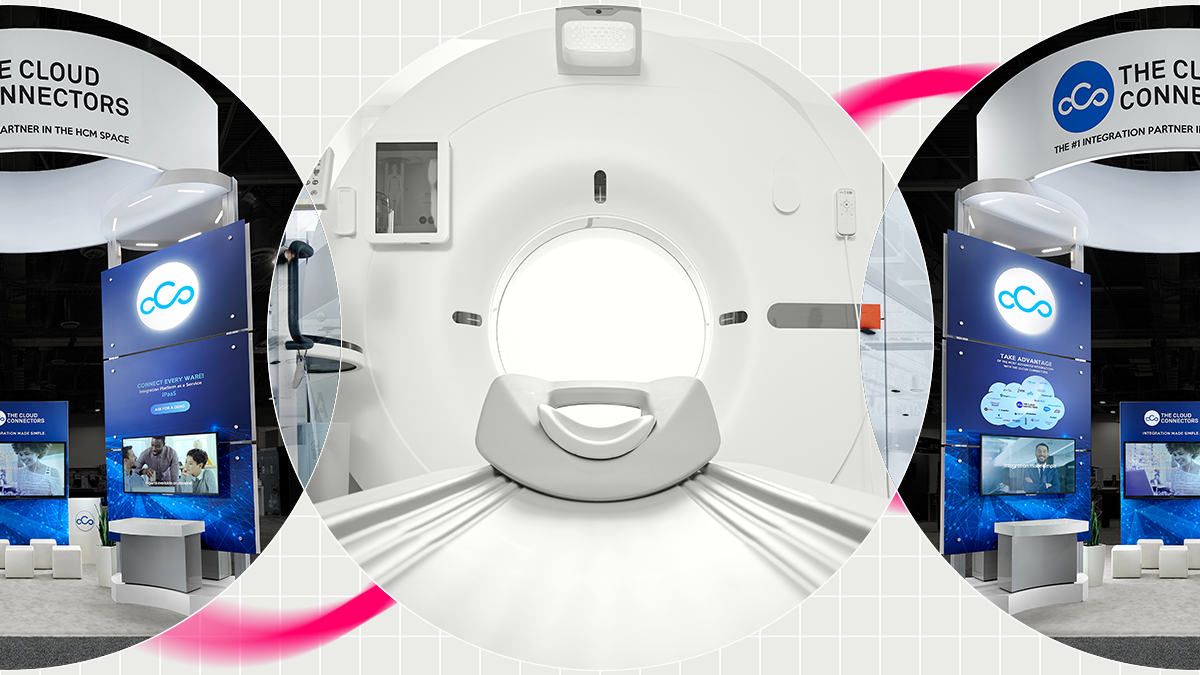
The Radiology Innovation Gap is the disconnect between how quickly medical imaging technology evolves and how slowly traditional exhibit assets change. At RSNA, this gap can make an owned booth feel outdated when product messaging, AI capabilities, demos, and buyer priorities shift faster than the physical exhibit can adapt.
The Booth Was Built for the Old Story
Radiology innovation is moving quickly.
AI, workflow automation, enterprise imaging, cloud platforms, diagnostics, interoperability, and clinical decision support are changing how medical imaging companies position themselves. A company that once sold around hardware performance may now be selling around workflow efficiency. A company that once focused on image quality may now need to tell a broader enterprise platform story.
But the booth may not have changed.
That is the Radiology Innovation Gap.
It is the moment when technology has advanced, but the exhibit experience is still built around the previous version of the story.
At RSNA, that gap is hard to hide.
Why the Radiology Innovation Gap Matters at RSNA
RSNA is where radiology brands are expected to show momentum. Buyers come looking for what is new, what is credible, and what can help their organizations move forward.
If your exhibit does not align with your current product strategy, the sales team has to work against the environment rather than be supported by it.
The gap can show up in several ways:
- Graphics that promote last year’s message
- Demo stations built around old workflows
- Too little space for current product priorities
- Meeting areas that do not support enterprise buying conversations
- Booth architecture that limits storytelling
- A layout that does not match how buyers evaluate the solution
The booth may still look polished. But if it is not aligned with the current strategy, it is underperforming.
Why Traditional Ownership Can Widen the Gap
Traditional booth ownership encourages reuse.
Reuse can be smart when the strategy is stable. But when the market is moving quickly, reuse can become a trap.
A company may continue using a booth because it already owns the structure, not because the structure is still the best environment for the current product story. That is when ownership starts influencing strategy in the wrong direction.
Instead of asking, “What experience do we need to create this year?” the team asks, “How can we make the old booth work again?”
That is not strategic agility. That is compromise.
How Custom Rentals Help Close the Gap
Custom rental exhibits help close the Radiology Innovation Gap by allowing the physical environment to evolve with the product story.
A custom rental can be designed around:
- This year’s launch priorities
- Current demo requirements
- Updated clinical proof points
- New messaging hierarchy
- Executive meeting needs
- Different booth sizes or show objectives
- A changing buyer journey
The brand still gets a premium, custom-feeling environment. But it does not need to carry the same long-term ownership burden.
That flexibility matters in radiology, where the product narrative can change quickly.
The Access Model as an Innovation Strategy
The access model is not just a cost strategy; it is an innovation strategy.
It allows a company to access the right exhibit environment at the right time, instead of dragging a fixed asset from one product era into the next.
For RSNA exhibitors, that means the booth can be shaped around the current moment:
- A major product launch
- A platform repositioning
- A new AI capability
- A new enterprise sales motion
- A shift from product selling to solution selling
- A year focused on executive meetings rather than broad awareness
This is how exhibit strategy keeps up with innovation.
Warning Signs Your Booth Is Falling Into the Gap
Your RSNA booth may be falling into the Radiology Innovation Gap if:
- Your sales team says, “We need to explain around the booth.”
- Your newest product is not the clearest story in the space.
- Your demo flow was designed for an older product.
- Your graphics are being updated, but the structure is not.
- Your meeting spaces do not match current buyer behavior.
- Your team feels obligated to reuse assets because they are already paid for.
- You are spending more energy making old properties work than designing the right experience.
If several of these are true, it may be time to rethink the model.
Where Exhibit Happy by Steelhead Comes In
Exhibit Happy by Steelhead helps radiology and MedTech companies close the Radiology Innovation Gap.
We design custom rental and access-model exhibit environments that keep pace with changing product stories. That means your RSNA presence can support this year’s demos, messaging, and sales goals without forcing your team to reuse an outdated booth that's already sitting in storage.
Your technology is evolving; your exhibit should evolve with it.
Frequently Asked Questions
What is the Radiology Innovation Gap?
It is the gap between fast-moving radiology innovation and slower-moving exhibit infrastructure. It happens when the product story changes faster than the booth can adapt.
Why does the Radiology Innovation Gap matter at RSNA?
RSNA is a major platform for medical imaging innovation. If the booth does not align with the company's current product strategy, the company may miss opportunities to communicate momentum and credibility.
How can companies avoid the Radiology Innovation Gap?
Companies can avoid the gap by using flexible exhibit strategies, modular design, custom rental exhibits, and access-model programs that allow the environment to evolve with the product roadmap.
Is the Radiology Innovation Gap only a design issue?
No. It is a sales, marketing, and financial issue. An outdated booth can affect buyer conversations, demo quality, pipeline creation, and budget efficiency.