Creating Clear Separation Between Branded and Unbranded Healthcare Exhibit Experiences
This is a scenario-based case study utilizing a fictional pharmaceutical brand, Solvanta BioSciences.
See the Model in Action
The scenario below illustratives a case study built around fictional healthcare brands, designed to show exactly how a custom-rental, compliance-first exhibit strategy plays out against the real challenges pharma, biotech, and MedTech teams bring to us.
The Scenario
Solvanta BioSciences was preparing for a major medical congress with two important objectives.
First, the team wanted to educate healthcare professionals about an underdiagnosed and often misunderstood disease state. Second, they needed to support conversations around an approved therapy with branded product information.
Both objectives mattered, but they could not be treated the same way.
The disease-awareness experience needed to remain unbranded, educational, and separate from promotional product messaging. The branded experience needed to include approved product content, required safety information, and materials that could move through internal review.
Solvanta needed an exhibit strategy that allowed both experiences to coexist at the same congress without blurring the line between education and promotion.
The Challenge
Solvanta’s internal teams knew the congress was an important opportunity to educate, engage, and build trust with healthcare professionals.
The opportunity was significant. Freeman’s 2024 Attendee Intent and Behavior research found that 80% of respondents viewed in-person events as the most trusted marketing channel, and 87% said discovering new products, solutions, and partners was a top factor influencing their attendance.
But healthcare exhibiting operates under a different set of rules than typical B2B exhibiting. A traditional exhibit approach created several risks:
- The unbranded education space could appear too connected to the product booth
- Branded claims, product visuals, or safety information could unintentionally influence the disease-awareness experience
- Review teams could require significant late-stage changes if the environments were not clearly separated
- The company could invest in a large custom booth that was difficult to adapt for future programs
- Attendees could be confused about which experience was educational and which was promotional
Solvanta needed more than a booth design. They needed a compliant experience strategy that made the purpose of each environment clear to attendees, internal stakeholders, and reviewers.
The Exhibit Strategy
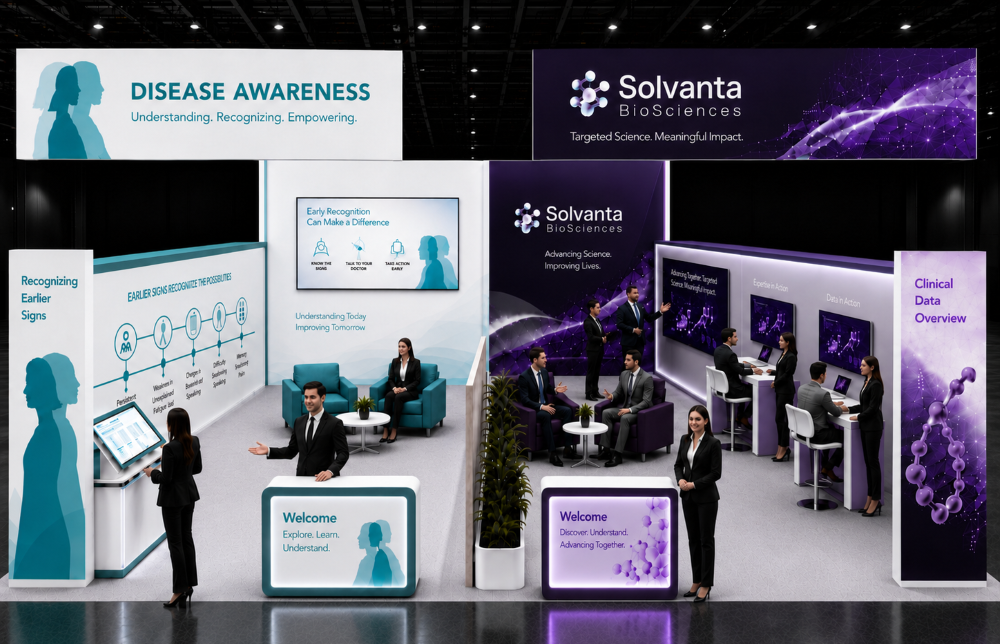
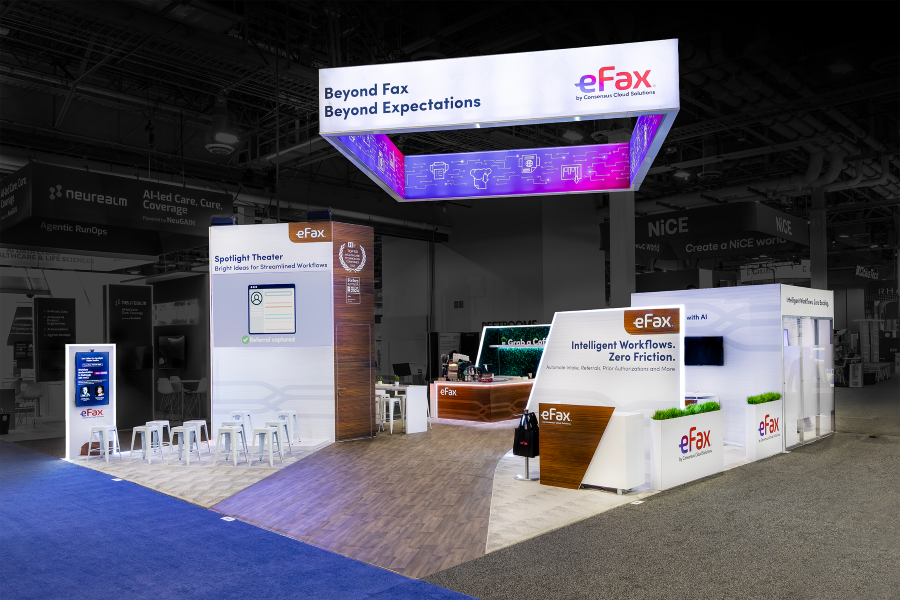
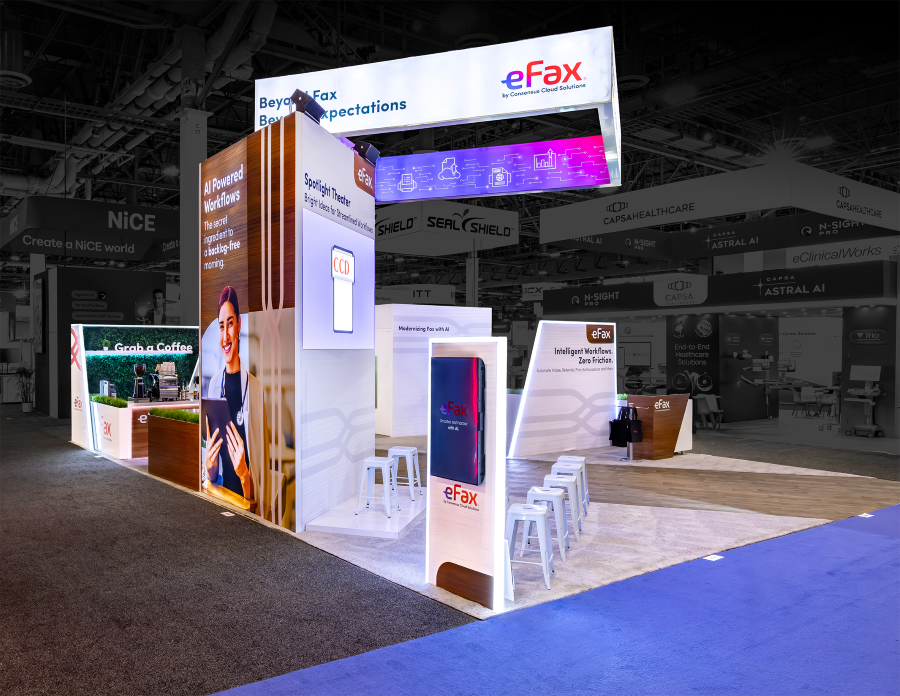
By utilizing a custom-rental access model, Solvanta was able to create two distinct exhibit environments with shared operational efficiency.
The strategy centered on separation, flexibility, and review readiness.
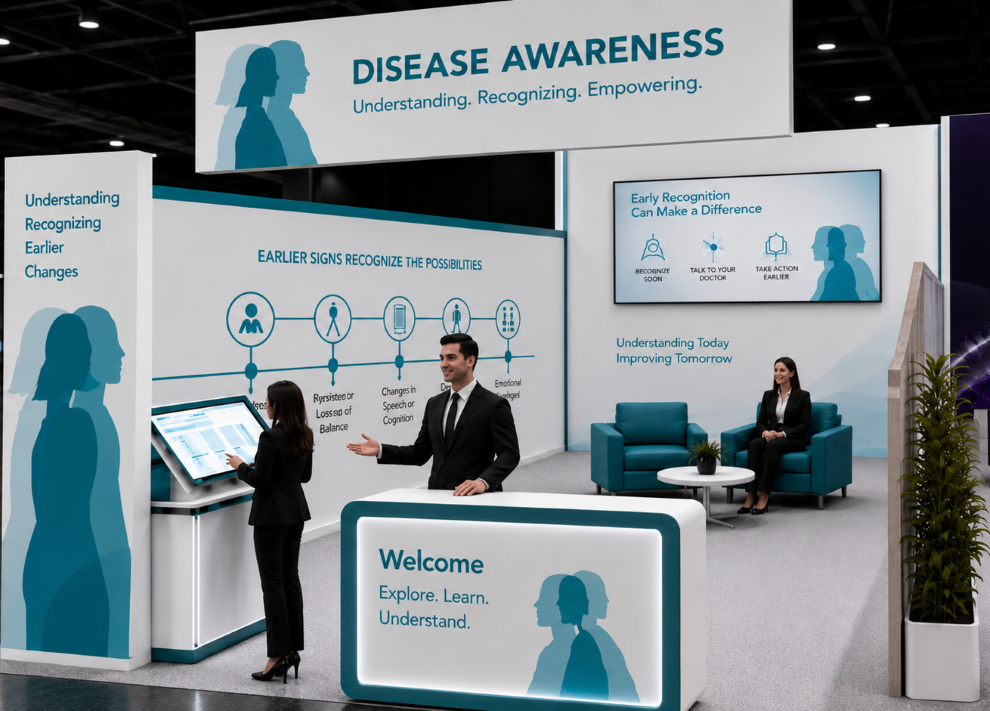
The unbranded environment was designed as a disease-awareness education space. It used neutral visual language, condition-focused messaging, and engagement tools that encouraged learning without referencing the approved product.
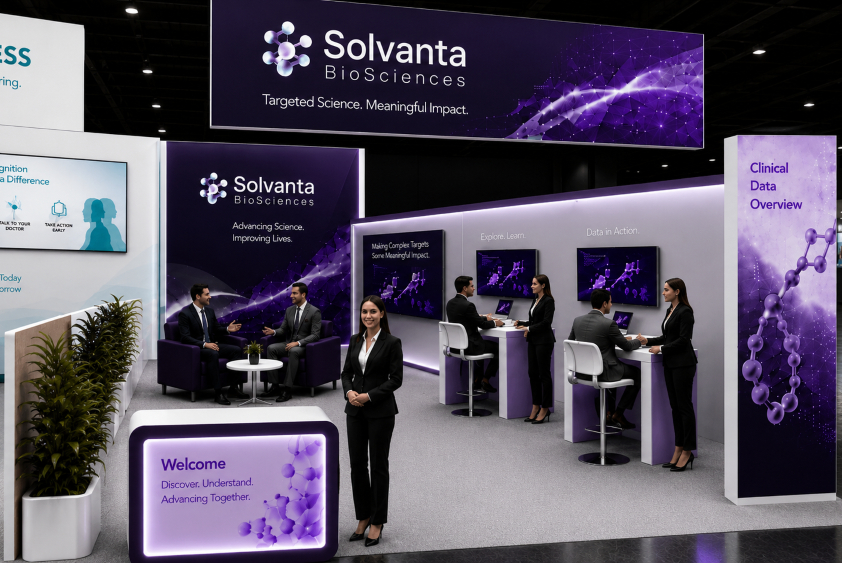
The branded environment was designed separately, with product-specific messaging, approved materials, literature areas, digital content, and dedicated space for Important Safety Information.
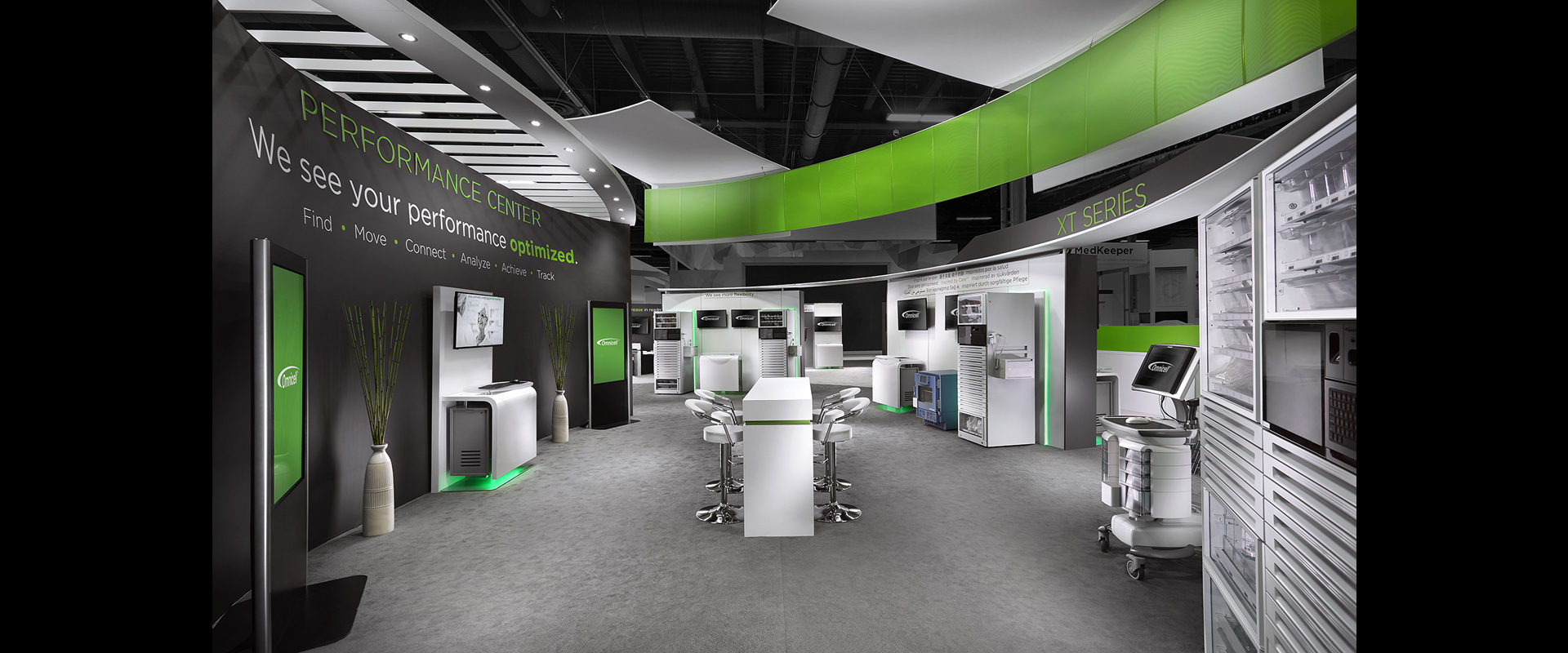
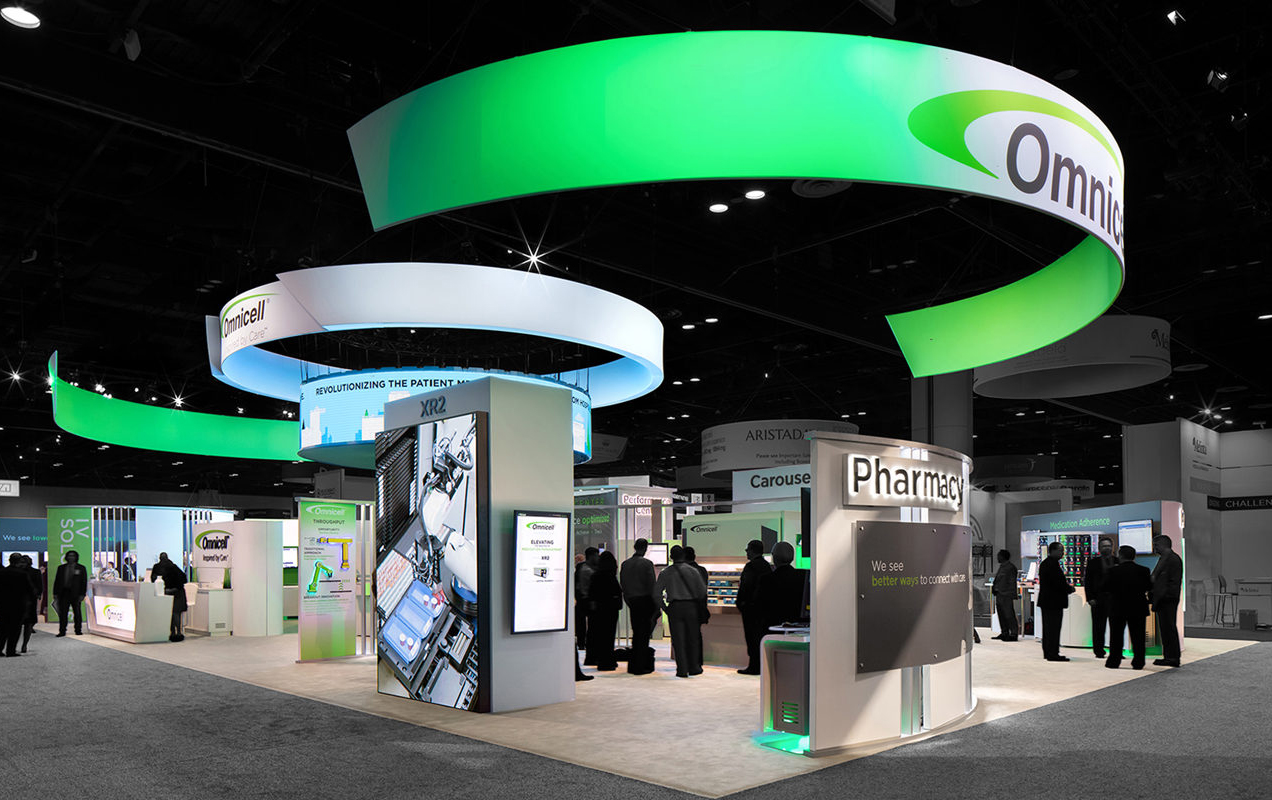
The two spaces were intentionally differentiated through layout, traffic flow, color systems, visual hierarchy, and content placement.
The result was not one booth trying to do two jobs. It was a coordinated congress presence with two clearly defined experiences.
The Unbranded Experience
The unbranded booth focused on disease education, patient journey insights, and healthcare professional awareness.
This was especially important because medical conferences remain a meaningful educational channel for clinicians. A Doximity poll of 3,629 clinicians found that 42% of clinicians regularly attend their specialty’s annual conference, with physicians attending at a higher rate than several other clinician groups.
Solvanta used the unbranded environment to support that educational behavior. The booth invited healthcare professionals into a condition-focused conversation without product names, branded claims, or visuals that could blur the line between awareness and promotion.
Because the exhibit structure was rental-based but custom-designed, Solvanta could reuse the unbranded environment across multiple meetings while refreshing content as disease-awareness priorities evolved.

The Branded Experience
The branded booth served a different role: approved product education.
Because attendees often come to in-person events to discover new products, solutions, and partners, Solvanta needed a branded environment that could support product conversations in a clear, compliant way. Freeman’s attendee research found that 87% of respondents named discovery of new products, solutions, and partners as a top attendance driver.
Unlike the unbranded space, this environment included approved product messaging, branded graphics, literature areas, digital content, and Important Safety Information.
The booth was designed with review requirements in mind from the beginning, including clear placement for approved materials and a layout that could be documented through annotated schematics.
The goal was not simply to separate the two booths physically. It was to make the purpose of each experience immediately clear to attendees and reviewers alike.
The custom-rental model allowed the branded space to feel polished and permanent while remaining adaptable. If PRC feedback required graphic, content, or layout changes, the exhibit could absorb those revisions without forcing the team into a complete redesign.

Why the Custom-Rental Access Model Made Sense
For Solvanta, the custom-rental model offered a practical way to manage complexity.
The team could create two high-quality exhibit environments without owning two fully custom booths. They could maintain clear separation between disease awareness and product promotion while still benefiting from a unified planning, fabrication, and logistics model.
That flexibility mattered because branded and unbranded healthcare environments often change at different speeds. Disease-awareness messaging may evolve with education priorities, while branded materials may change based on PRC review, safety updates, or product strategy.
It also mattered from show to show. Even when the overall footprint stayed the same, traffic flow could vary depending on hall placement, aisle openings, neighboring booths, and attendee behavior. A split branded and unbranded presence needed enough structural flexibility to adjust entrances, sightlines, pathways, and engagement zones without compromising the separation between the two experiences.
With a custom-rental strategy, Solvanta could adapt the booth layout for each congress while keeping the core exhibit system consistent. That gave the team the ability to protect compliance-minded separation, improve attendee flow, and avoid rebuilding from scratch every time the show environment changed.
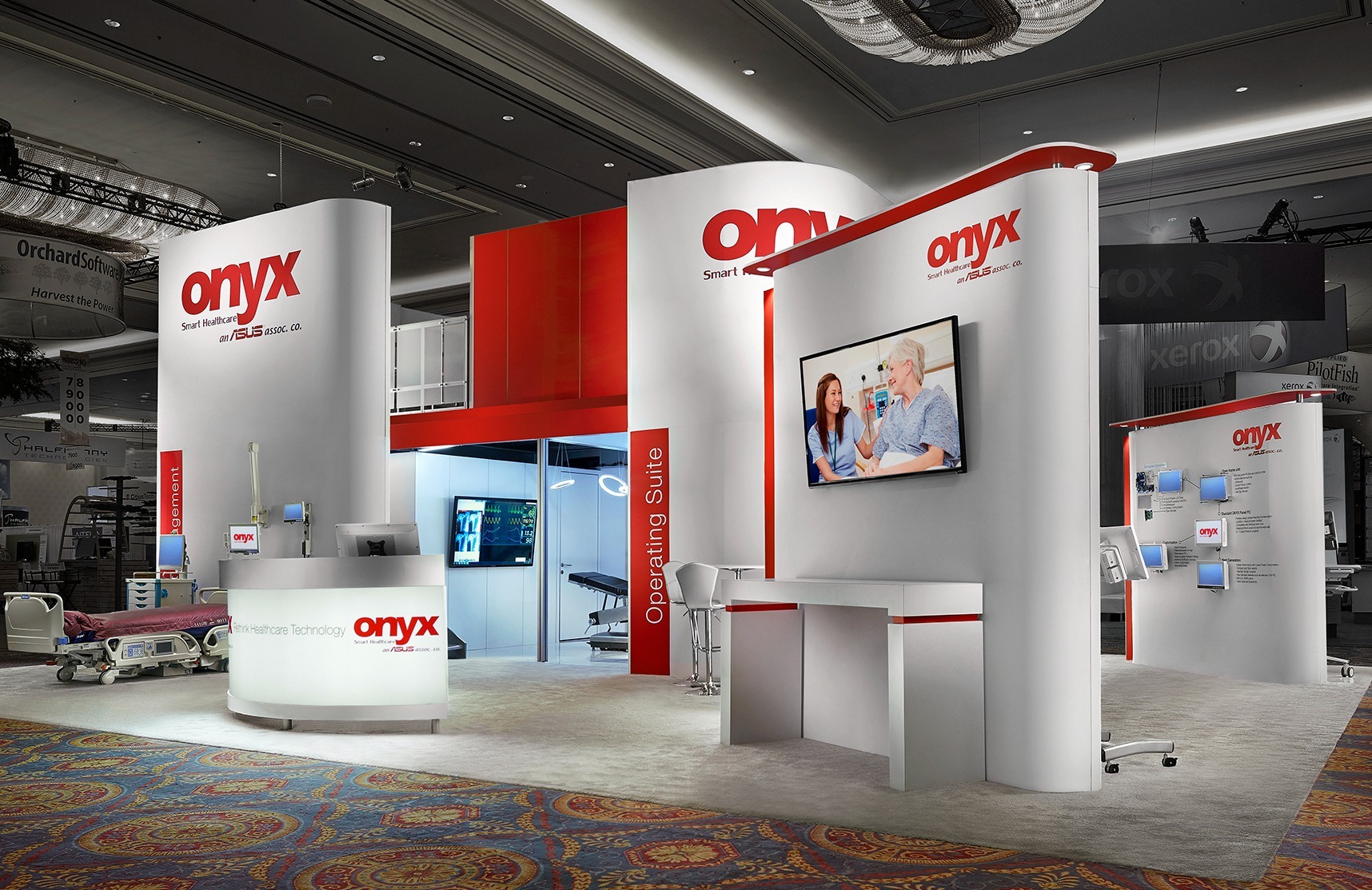
A custom-rental strategy gave Solvanta the ability to create compliant separation without sacrificing quality, consistency, or speed.
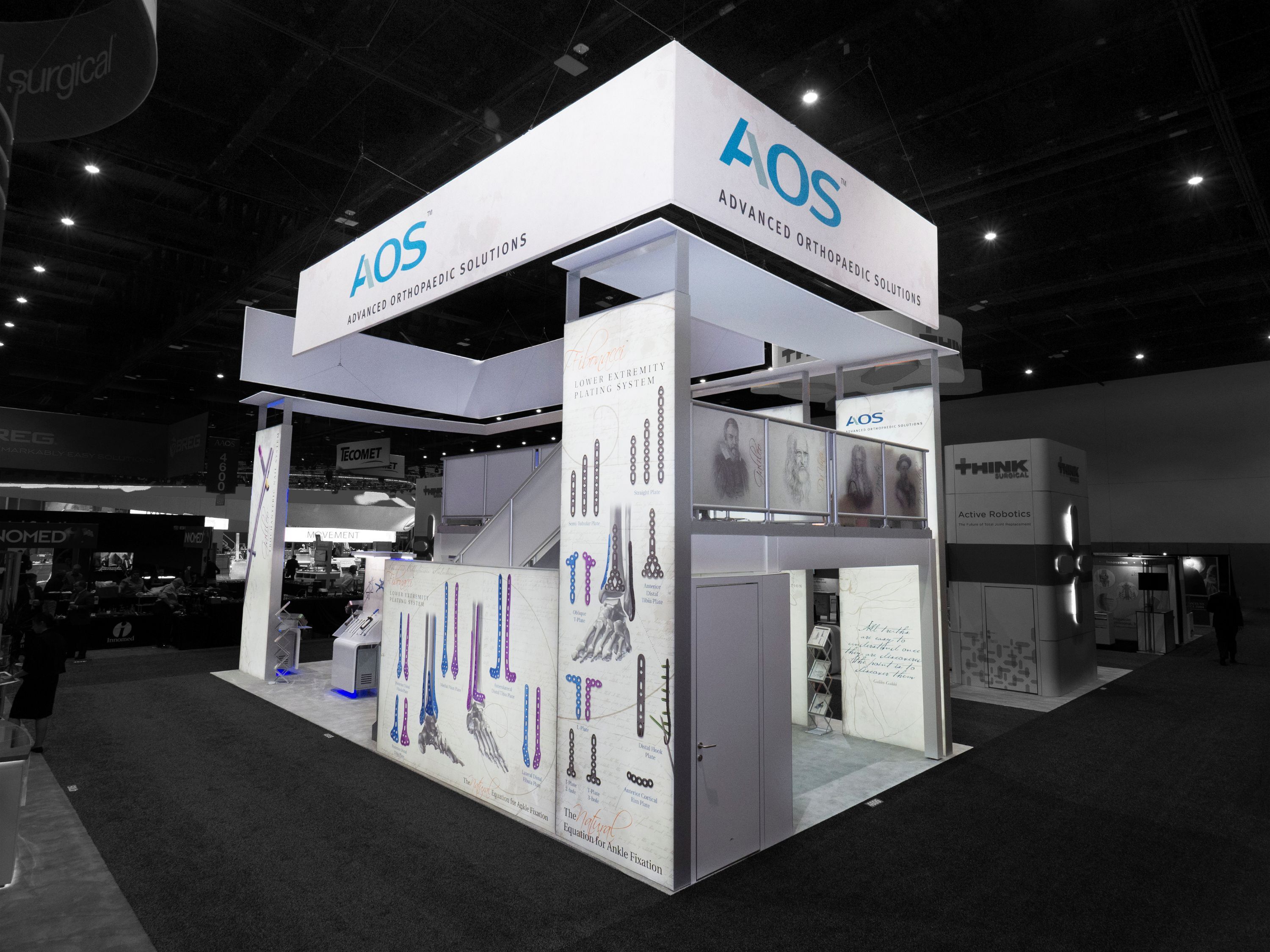
The Outcome
Solvanta arrived at the congress with two experiences that served different purposes and respected different compliance considerations.
The unbranded booth supported disease-state education in a way that felt informative and approachable. The branded booth supported product education in a way that was structured, review-ready, and commercially useful.
Attendees understood the distinction between the two spaces. Internal teams had a clearer path through review. And Solvanta avoided the cost and rigidity of building fully owned exhibits for two separate communication needs.

Key Takeaway
For healthcare brands, branded and unbranded experiences should not compete for space or blur together.
They should be intentionally designed, clearly separated, and built to support the realities of regulated communication.
A custom-rental exhibit model gives healthcare marketers the flexibility to create distinct experiences for distinct goals while staying prepared for review, revision, and reuse.