


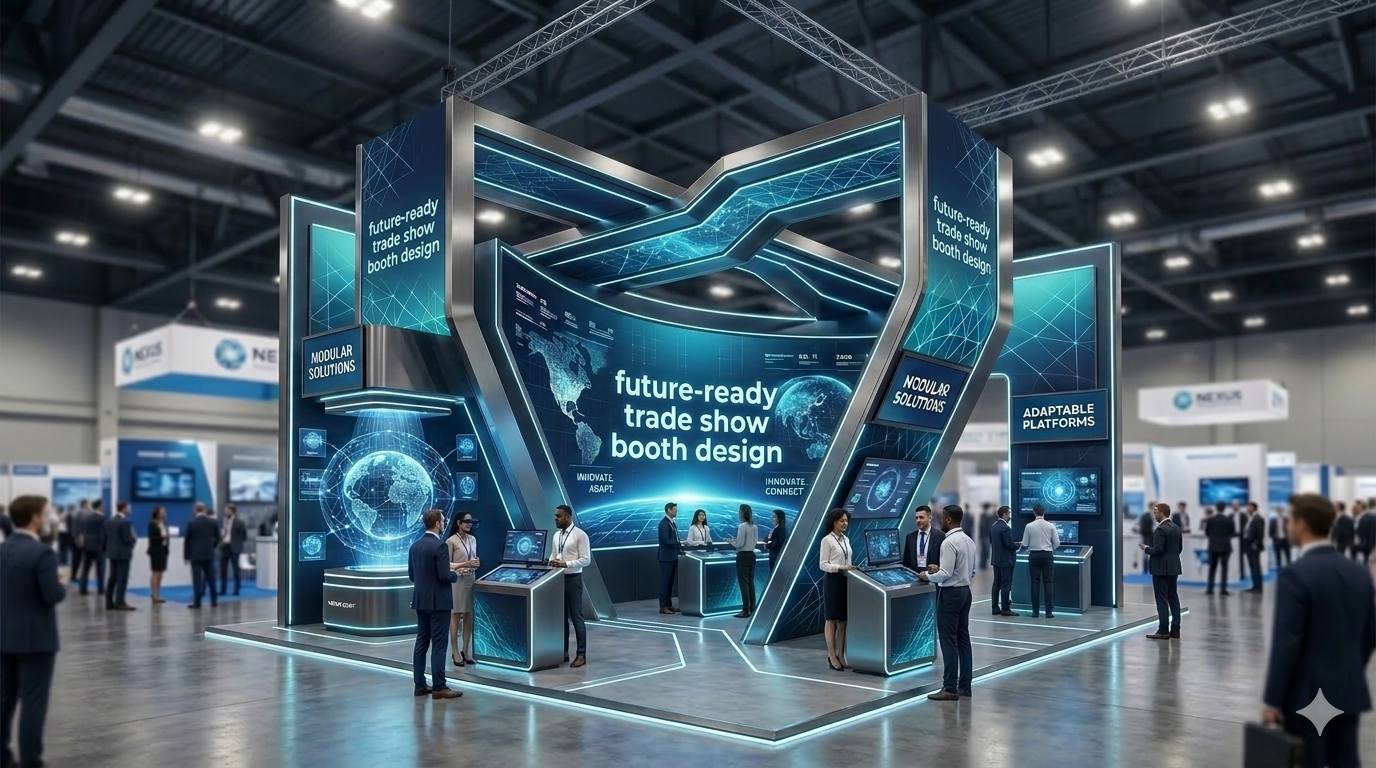
If the last few years have taught event marketers anything, it’s this: change is constant.
According to the Center for Exhibition Industry Research (CEIR), 84% of exhibitors say in-person events are critical to their organization’s success (CEIR Index Report). That means trade shows aren’t going anywhere—but the expectations around them are evolving fast.
For today’s VP of Marketing, the question isn’t whether to invest in trade shows. It’s whether your exhibit strategy is built to adapt.
That’s where future-ready trade show booth design comes in.
This article explores how to think beyond one event cycle and build a booth strategy that supports long-term brand growth, operational flexibility, and measurable ROI.
What Is Future-Ready Trade Show Booth Design?
Experiential trade show marketing focuses on designing interactive, sensory-rich environments that move beyond product displays. Instead of telling attendees what you do, you create opportunities for them to experience your brand.
At its core, experiential marketing at trade shows includes:
-
Multi-sensory design (visual, audio, tactile elements)
-
Interactive technology
-
Live demonstrations or performances
-
Personalized brand journeys
-
Content-worthy moments designed for social amplification
If you’re new to experience-first strategy, you may also want to explore how these ideas connect to broader exhibit strategy in Experience-Driven Trade Show Strategy: From Concept to Execution.
Why Traditional Booth Design No Longer Works
Historically, many brands approached exhibit design as a one-off capital expense. Build big. Ship it everywhere. Refresh every few years.
But modern event marketing requires:
-
Faster campaign pivots
-
More content integration
-
Cross-channel storytelling
-
Sustainability accountability
-
Budget optimization
If your booth can’t flex, your marketing strategy can’t either.
This is why many brands are shifting toward modular systems and custom rental models that allow them to stay current without full rebuilds each season.
1. Design for Modularity and Scalability
A core principle of future-ready trade show booth design is modular construction.
Instead of a fixed footprint, think in scalable components:
-
Reconfigurable walls
-
Interchangeable graphics
-
Expandable meeting areas
-
Swappable digital displays
This allows your team to:
-
Downsize for regional shows
-
Expand for flagship events
-
Update messaging without structural rebuilds
For a VP of Marketing managing a national or global show calendar, this flexibility directly impacts cost efficiency and brand agility.
2. Integrate Digital Infrastructure from Day One
Future-ready design isn’t just physical—it’s digital.
Booths must now support:
-
Interactive screens
-
Lead capture systems
-
Live social content
-
Data analytics tracking
-
Hybrid integrations
Digital integration should be planned structurally, not added as an afterthought.
For example:
-
Built-in power routing
-
Hidden cable management
-
Dedicated tech zones
-
Secure equipment storage
Planning for these elements upfront ensures your exhibit remains relevant as engagement technology evolves.
3. Build Sustainability Into the System
Sustainability is no longer a “nice to have.” It’s a reporting category.
Investors, stakeholders, and customers increasingly expect environmental accountability. Future-ready trade show booth design prioritizes:
-
Reusable structures
-
Lightweight materials to reduce freight emissions
-
Modular components to prevent waste
-
Rental models that eliminate storage and landfill disposal
A system-based approach reduces material turnover and supports ESG reporting goals.
For marketing leaders responsible for brand reputation, sustainable exhibit planning is strategic—not just operational.
4. Design for Experience, Not Just Architecture
A future-ready exhibit isn’t defined by height or square footage. It’s defined by how it performs.
Modern buyers expect:
-
Immersive storytelling
-
Interactive touchpoints
-
Clear messaging pathways
-
Emotional brand experiences
Experience design must be adaptable across:
-
Product launches
-
Thought leadership campaigns
-
Brand awareness initiatives
-
Account-based marketing activations
Instead of rebuilding your booth to support new messaging, a flexible exhibit framework allows creative updates within a consistent structure.
5. Protect Budget Predictability
One of the biggest risks in exhibit programs is unpredictable cost escalation.
Future-ready trade show booth design includes:
-
Transparent pricing structures
-
Guaranteed addendum policies
-
Long-term planning agreements
-
Inventory systems that eliminate surprise rebuild costs
For VPs managing multi-million-dollar marketing budgets, cost predictability is as important as creative impact.
A strategic exhibit partner should help eliminate financial volatility—not introduce it.
6. Align Exhibit Strategy With Long-Term Brand Architecture
Your booth is not a standalone marketing asset. It’s a physical extension of your brand ecosystem.
Future-ready design thinking aligns your exhibit with:
-
Brand refresh timelines
-
Campaign calendars
-
Sales enablement initiatives
-
Product roadmap releases
When exhibit design is integrated into long-term marketing planning, it becomes a growth tool—not just an event expense.
For a VP of Marketing, this alignment ensures trade shows support enterprise objectives rather than operating in isolation.
7. Choose a Partner That Plans Beyond This Year
Perhaps the most overlooked element of future-ready trade show booth design is partnership.
The right exhibit partner should help you:
-
Plan multi-year strategies
-
Analyze performance metrics
-
Adapt to shifting show portfolios
-
Identify where rental, modular, or hybrid models make sense
Future-ready planning isn’t about predicting the next trend. It’s about building a system that absorbs change.
How to Turn Experiential Ideas into Strategy
Having experiential trade show marketing ideas is only step one. Execution requires alignment.
Ask these strategic questions:
-
What action do we want attendees to take?
-
What story are we telling?
-
How does the experience support pipeline goals?
-
What data are we capturing?
-
How will this extend beyond the event?
Experiential design should never operate in isolation. It must integrate with your broader trade show strategy, sales enablement, and content marketing initiatives.
Common Mistakes to Avoid
Even well-intentioned experiential trade show marketing ideas can fall flat if they:
-
Focus on spectacle over substance
-
Ignore lead capture integration
-
Overcomplicate navigation
-
Fail to train booth staff
-
Lack post-show follow-up strategy
Remember: engagement without conversion is entertainment—not marketing.
Ready to Build a Future-Ready Exhibit Strategy?
If your 2026 show calendar includes more events, higher expectations, and greater accountability, it’s time to rethink how your exhibit program is structured.
Let’s design a future-ready trade show booth design system that adapts with your brand, supports measurable performance, and protects your long-term investment.
👉 Contact us to start building an exhibit strategy designed for what’s next: