


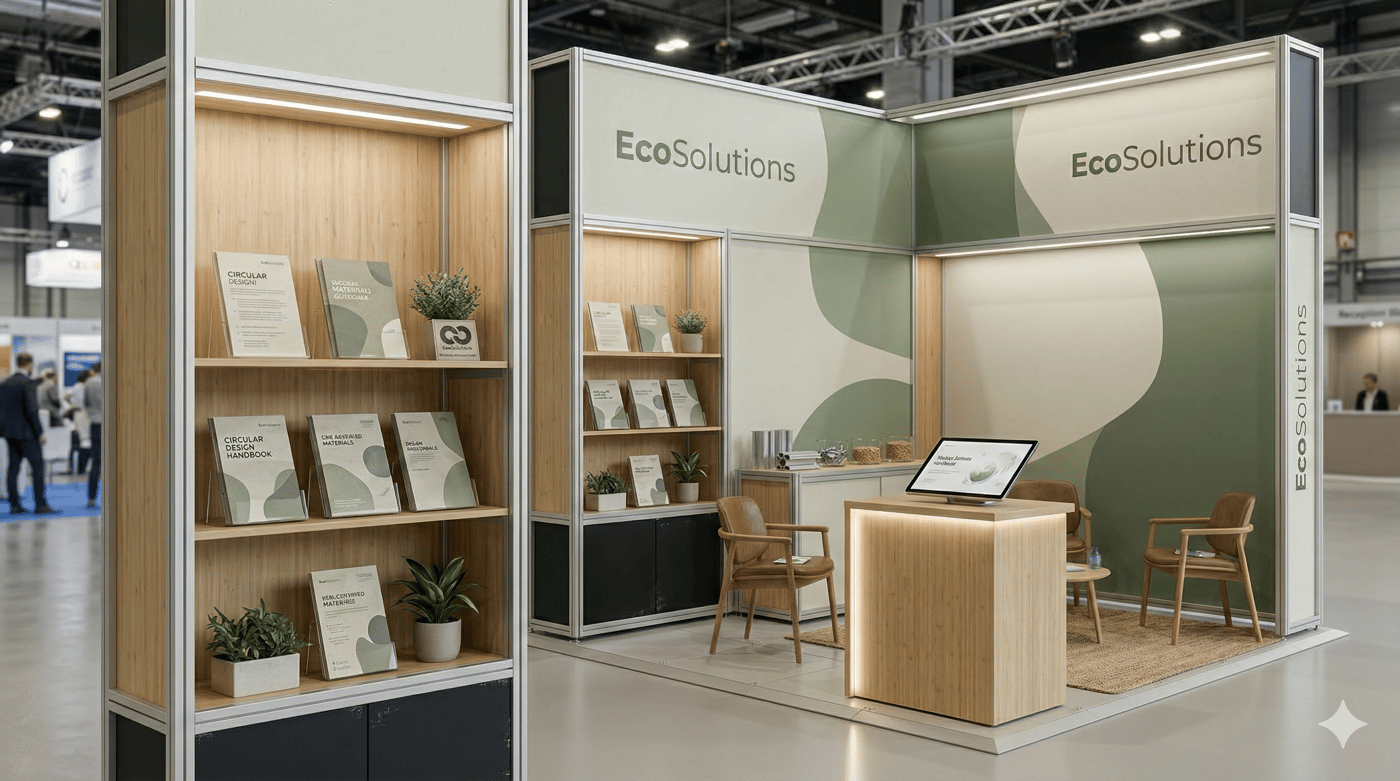
According to a report by NielsenIQ, 78% of U.S. consumers say a sustainable lifestyle is important to them.¹ While trade shows operate in the B2B space, brand perception is still driven by the same sustainability expectations shaping consumer markets.
For managing directors overseeing event strategy, that shift creates both opportunity and risk.
The opportunity: use sustainable trade show displays to strengthen brand credibility, align with ESG commitments, and reduce long-term operational waste.
The risk: falling into greenwashing—making environmental claims that are vague, unverifiable, or purely cosmetic.
In today’s environment, sustainability isn’t a marketing accessory. It’s an operational decision that affects procurement, logistics, design systems, and vendor partnerships. And buyers are increasingly savvy about the difference.
This guide outlines how to implement sustainable trade show displays authentically—without overpromising or undermining trust.
What Greenwashing Looks Like in Exhibit Programs
Greenwashing in trade shows typically shows up in subtle ways:
-
Highlighting one eco-friendly material while ignoring overall waste
-
Using “sustainable” messaging without measurable data
-
Printing sustainability claims directly on disposable graphics
-
Promoting carbon neutrality without understanding Scope 1, 2, or 3 emissions
For leadership teams, the real concern isn’t just optics—it’s credibility.
A managing director must ensure sustainability messaging aligns with operational reality. If your exhibit claims environmental responsibility, your design, logistics, and production strategy must support it.
Authentic sustainable trade show displays are built on systems, not slogans.
The Foundation: Design for Reuse, Not Replacement
The most impactful sustainability move in trade shows isn’t bamboo flooring or recycled carpet tiles.
It’s reuse.
Designing modular, reconfigurable exhibit systems dramatically reduces material waste over time. A booth structure that adapts across multiple shows avoids repeated fabrication and disposal cycles.
This approach aligns closely with our philosophy around scalable and rental-based solutions. If you’re exploring adaptability across events, review:
→ Designing Flexible Exhibits for Multi-Show Use
→ Modular Exhibit Design Systems: Flexibility Without Compromise
Reusable systems support sustainability in three major ways:
-
Lower material consumption
-
Reduced shipping weight and fuel impact
-
Fewer landfill contributions post-show
When evaluating sustainable trade show displays, ask:
Can this structure serve three, five, or ten events?
If not, it’s not truly sustainable.
Rentals vs. Ownership: The Sustainability Conversation Most Brands Avoid
Ownership has historically been the default in exhibit programs. But owning booth assets often leads to:
-
Warehousing costs
-
Outdated structures
-
Disposal after short lifecycle use
Custom exhibit rental programs provide a compelling sustainability advantage. They extend asset lifecycles across multiple brands and events, reducing single-use fabrication.
A custom rental model, for example, allows brands to show up with a “fresh” booth without building from scratch each time—supporting both creative flexibility and reduced waste.
For managing directors overseeing budget efficiency and ESG goals, rental models support:
-
Capital flexibility
-
Reduced material waste
-
Predictable pricing structures
-
Lower long-term environmental footprint
Sustainability and financial efficiency don’t have to compete.
Material Transparency: Ask Better Questions
Authentic sustainable trade show displays require transparency from partners.
Key questions to ask your exhibit provider:
-
What percentage of materials are reusable across events?
-
Where are materials sourced?
-
What happens to graphics after a show?
-
How is freight optimized to reduce emissions?
-
Is there documented waste diversion reporting?
If your exhibit partner cannot provide data—or defaults to general statements like “eco-friendly” or “green materials”—that’s a red flag.
True sustainability is measurable.
ESG Reporting and Trade Shows: Closing the Gap
Many companies publish annual ESG reports. Few account for trade show operations in measurable ways.
Managing directors should consider integrating exhibit metrics into broader sustainability reporting:
-
Total material reuse percentage
-
Waste diversion rates
-
Freight reduction initiatives
-
Rental utilization rates
-
Energy-efficient lighting integration
Trade shows may represent a small percentage of total emissions, but they are highly visible brand moments.
If sustainability messaging appears in your booth, your ESG reporting should support it.
Alignment builds credibility.
How to Communicate Sustainability Without Greenwashing
If your exhibit incorporates sustainable practices, communicate them clearly—but responsibly.
Instead of saying:
“We’re committed to sustainability.”
Say:
“This exhibit system is designed for reuse across six events annually, reducing fabrication waste by X%.”
Specifics build trust.
Transparency builds authority.
Avoid overstated claims. Avoid virtue signaling. Avoid messaging that outpaces operational reality.
Managing directors should treat sustainability claims the same way they treat financial reporting—with scrutiny and documentation.
The Long-Term View: Sustainable Trade Show Displays as Competitive Advantage
Sustainability in trade shows isn’t just about environmental responsibility.
It’s about:
-
Operational efficiency
-
Risk mitigation
-
Brand trust
-
Procurement alignment
-
Future-proofing exhibit investments
The most effective sustainable trade show displays are not temporary solutions. They are scalable systems designed for longevity, flexibility, and measurable reduction in impact.
When sustainability is embedded into exhibit strategy—not layered on top—it becomes a competitive advantage.
Sustainability Without Compromise
Sustainable trade show displays require more than recycled materials or eco-themed messaging.
They require:
-
Reusable design systems
-
Rental-based flexibility
-
Freight optimization
-
Transparent reporting
-
Long-term strategic planning
Avoiding greenwashing isn’t about saying less. It’s about doing more—and documenting it.
If your leadership team is evaluating how to align exhibit strategy with ESG commitments without sacrificing creativity or performance, it’s time for a more intentional approach.
Ready to Build Smarter, More Sustainable Exhibits?
Ready to design exhibit systems that reduce impact without reducing performance?
For personalized exhibit management and sustainable design guidance, contact us today. Steelhead specializes in creating adaptable, scalable exhibit solutions that help brands meet both growth and sustainability goals.